Showing posts with label Anthony Gabriele. Show all posts

Sunday, 9 June 2024

The Music of Ennio Morricone - Review

National Concert Hall, Dublin


****


Conducted by Anthony Gabriele


Anthony Gabriele and the RTÉ Concert Orchestra

Accomplished conductor Anthony Gabriele took to the podium of Dublin’s National Concert Hall to conduct the RTÉ Concert Orchestra in an evening of The Music of Ennio Morricone. The concert marked the first occasion that both orchestra and conductor had performed Morricone’s work and the event proved sublime.

The great scores were all acknowledged, with the Main Theme from The Untouchables getting proceedings underway, with Sergio Leone’s The Good, the Bad and the Ugly following soon after – that film’s iconic Main Theme leading into Ecstasy of Gold with an exquisite soprano contribution from Muirgen O’Mahony. The choral backdrop to the piece came from the Mornington Singers’ ensemble who had been well rehearsed by their chorus master Orla Flanagan. O’Mahony was also to shine magnificently with her vocal work in the Main Theme from Once Upon a Time in the West and in Deborah’s Theme from Once Upon a Time in America, both movies again of course directed by Leone. If there was but one small flaw in the evening, it was in the sound design supporting the choir. Sat aloft in the hall’s gallery, the 30-strong singing company sometimes needed more amplification to be heard in balance against the strong music emanating from the orchestra below them.  

Maestro Gabriele’s passion for the works that he was conducting was almost tangible. Between occasional numbers he spoke reverentially yet knowingly of Morricone’s work, referencing the quintessential quality found throughout the composer’s work, that of l’italianità. 

The first half of the evening went on to include the rarely heard theme from La Califfa, a piece that highlighted some gorgeous oboe work from James Hulme. Morricone’s only competitively-won Oscar was earned in 2016 for his score for Tarantino’s The Hateful Eight and it was that movie’s stunning L’Ultima Diligenza di Red Rock that led into the interval.

The second half of the show kicked off with the Main Theme followed by the Love Theme from Tornatore’s Cinema Paradiso – allowing the orchestra’s Leader and solo violinist Mia Cooper to offer up an enchanting take on Morricone’s haunting melodies. Chi Mai from Le Professionnel (but forever associated in these isles with the BBC’s Life & Times of David Lloyd George) was to be included in the following selections, together with two of Leone’s Spaghetti Westerns, A Fistful of Dynamite and A Fistful of Dollars adding to the evening’s delight.

Two numbers from Roland Joffe’s The Mission, sparklingly introduced by Gabriele led towards the concert’s conclusion as James Hulme was again fabulous with Gabriel’s Oboe, as flautist Silvija Ščerbavičiūtė excelled in The Falls.

All credit to Gabriele, the orchestra and the singers – their performances were a marvellous tribute to the work of Ennio Morricone.


Photo credit: Chris Mason

Tuesday, 22 November 2022

Spectre In Concert - Review

Royal Albert Hall, London


*****


Composed by Thomas Newman
Conducted by Anthony Gabriele
Directed by Sam Mendes


At the Royal Albert Hall and conducted by the gifted Anthony Gabriele, the Royal Philharmonic Orchestra performed the world premiere of Thomas Newman’s 2015 score for the James Bond film Spectre, played live and synchronised to a screening of the movie.

Composed by Newman alongside filming, the score is both inspired by and honours many of the film’s locations. Memorably, the opening sequence set in full swing at a Day Of The Dead festival alongside local bands in Zócalo Square in central Mexico City, gives the orchestra and in particular the percussion section, full opportunity to embrace the vibe of the occasion.

The titles play to Sam Smith's ballad The Writing's On The Wall, with its dramatic strings content deliciously echoing Monty Norman.  For lovers of the famous franchise, Newman’s work incorporates those familiar, almost expected Bond-sounds and the orchestra deliver magnificently. The powerful accompaniment of the musicians provides added excitement, a supercharged experience in the form of waves of pleasure, aesthetic chills almost, from the musical vibrations generated in the acoustically perfect auditorium. Under Maestro Gabriele’s seasoned baton, the orchestra add another nuanced layer to the viewing experience.

The afternoon closed with the familiar Jazzy big band sound of Norman’s original "James Bond Theme".  One could feel the audience relax into their seats, succumbing to that timeless leitmotif, the applause and standing ovation only defining their appreciation and fondness for this classic music, wonderfully and flawlessly performed.


Reviewed by Lucy Bex

Sunday, 26 June 2022

Superman In Concert - Review

Royal Albert Hall, London


*****

Composed by John Williams
Conducted by Anthony Gabriele
Directed by Richard Donner


Christopher Reeve


Yet again, accomplished maestro  Anthony Gabriele picked up his baton to conduct a cracking orchestra, delivering the cracking score of a cracking movie.

For one night only at the Royal Albert Hall, he offered a rare chance to see Richard Donner’s 1978 Superman, not only amidst the hall’s crowded “movie-theatre” audience but, for the first time in the UK, with John Williams’ legendary score played live in accompaniment. The score is so evocative and impressive that even as the opening credits, along with the final bars of Williams’ accompanying opening theme faded, the audience burst into spontaneous applause. Those credits themselves were a reminder of the talent that Donner had assembled for his movie - truly a platinum-plated cast.

Superman is one of those movies that blends acting, screenplay and score into a fusion of excellence, with the Royal Albert Hall proving to be the perfect venue. The hall’s darkness provided a perfect contrast to the perfectly pitched luminance of the digital projection and the acoustics of the place, with its ceiling-suspended domes, gave a magnificent body and depth to Williams’ score, as played by the Royal Philharmonic Concert Orchestra.

The evening also offered a chance to look back in time, not just at how much the movie-makers of that era were able to accomplish without the helping hand of CGI, but even more so, at how much our cultural norms have evolved. Superman may have journeyed through thousands of our years on his journey from the planet Krypton to Earth, but in just a few short decades here, one could be forgiven for feeling that our world has changed even more rapidly. The movie sees Marlon Brando (as Superman’s father Jor-El) imbuing his parting words to his baby son Kal-El (the would-be Superman) with no reference whatsoever to his wife (Susannah York), as though single-handedly he had brought his progeny into the world, a concept that would never even be contemplated by today’s screenwriters. Although to be fair, with York resembling little more than a muted Julie Christie on a bad day, one could perhaps have some sympathy towards Brando’s supreme egocentricity. The movie’s sexual politics are equally (some may say deliciously) dated. Superman’s x-ray vision sees through Lois Lane's dress (albeit at her request) while she in turn goes weak-kneed speculating on “how big” he is.

It wasn’t just Brando though, nor the much-missed Christopher Reeve in the title role. Gene Hackman, Ned Beatty, Margot Kidder are all gems, with even the likes of then-veteran Trevor Howard lobbing in a 5 minute cameo. And of course the screenplay bears the imprimatur of the godfather of great-writing, Mario Puzo.

But at the Royal Albert Hall last night the deserved stars of the evening were Williams, Gabriele, and the 80+ strong ensemble of the Royal Philharmonic Concert Orchestra. When this evening returns as it surely must, don’t miss it. With Williams’ wondrous score in your ears, you’ll believe a man can fly.


The Maestro's Superman socks


Monday, 4 April 2022

Philharmonia At The Movies - E.T. The Extra Terrestrial - Review

Royal Festival Hall, London


*****


Composed by John Williams
Conducted by Anthony Gabriele
Directed by Steven Spielberg


Steven Spielberg’s genius in narrating a story through film, is unsurpassed. His envisioning of a plot’s evolution told through either grand scenic presentations or just the subtlest glance of a protagonist, holds us spellbound. And no more so is Spielberg’s craft evident than in his 1982 blockbuster E.T. The Extra Terrestrial, that told of an alien creature (E.T.) left behind in California when its spaceship had to hurriedly flee Earth to avoid capture, the movie then exploring the bond that evolved between E.T. and the young boy Elliott who found and befriended the creature.

The story is genius in itself – in a concept first explored by Spielberg in the 1977 movie Close Encounters Of The Third Kind, his aliens are friendly. They come in peace, with the theme of the 1982 picture being a child’s and E.T.’s innocent love for each other. And so, with a combination of stunning performances, ingenious special effects – all the more so when one recalls that this was before the time of today’s ubiquitous CGI -  and gorgeous photography, Spielberg’s story was told.

But there was a further component, critical to the hallmarking of this movie as worthy of the pantheon and that was its score. And in Spielberg’s wonderfully well-established partnership with composer John Williams, so was a symphonic accompaniment achieved that not only enhanced the arc of the story, it served to tell parts of the story too such is Williams’ talent.

Last week, under the baton of Anthony Gabriele and for one night only, London’s Philharmonia Orchestra played William’s score live alongside the movie being screened. Gabriele is a master of synchronising an orchestra’s live performance to the unforgiving fixed demands of a movie screening and his coaxing the aural beauty of the Philharmonia’s talent, opened up new layers of nuance to this wonderful fable.

No plot discussions here – most people know the tale, how it develops and how it ends. But when one recalls the movie’s unforgettable scene of Elliott, with E.T. in his bicycle basket, flying (cycling) in silhouette past the moon – an image that now defines Spielberg’s own production company Amblin Entertainment – it is Williams’ Flying theme that we hear. And to hear that glorious melody played live as Elliott dreamily pedals across the screen is just exquisite.

The Philharmonia are of course world-class, and their delivery of William’s score was flawless. To name individual performers is invidious – they are all masters (and indeed many are Professors of their chosen instrument) but amidst such a plethora of perfection, to be able to glance down from the screen and observe harpist Heidi Krutzen adding to the film’s gorgeous sensitivities or in contrast Antoine Siguré’s menacing work on the timpani was sublime. And of course, during Flying, it was Zsolt-Tihamer Visontay and Emily Davis whose violin sections were chiefly responsible for making the audience’s spirits soar.

This combination of a classic film, projected over the heads of the players and instruments of one of the finest orchestras around and all helmed under Gabriele’s masterful baton, created an evening that that was simply out of this world!

Sunday, 15 April 2018

The Wizard of Oz - Review

London Palladium, London


*****


Conducted by Anthony Gabriele


Nearly 80 years after its release, there is not a lot left to say about the wonderful The Wizard Of Oz. A classic movie, beautifully crafted from script through to performance, design, photography, choreography and a legendary score.

Until, that is, one has the privilege of watching the movie on the big screen with the score played live by a 64 strong orchestra under the baton of Anthony Gabriele and Leader Susan Bowran in a screening produced by Ollie Rosenblatt for Senbla, in association with IMG.

We all know the story with its strongly fabled morality and lyrics that are literally enchanting. Gabriele has studied the film meticulously and his conducting his spot on to the frame. A skilled Musical Director will be able to harness live musicians to live actors with a seamless fluidity. But where the action is on screen however, the scope for fluid flexibility and the odd filler-bar here or there is not an option. For 2 hours and 400 pages, Gabriele has to hit his mark with pinpoint precision. And he does. Connecting us with our pasts and our heritage and offering a timeless link to a beautiful history.

Judy Garland et al may be captured, beautifully, in that flickering light beam and one may know the movie thoroughly, but Gabriele truly takes this score over the rainbow. If the gig comes around again, don’t miss it!

Saturday, 25 February 2017

Movie Classics For Valentine's - Review

Barbican Hall, London


****


London Concert Orchestra
Conducted by Anthony Gabriele


I have written before of conductor Anthony Gabriele’s love affair with the movies. The Italian has an innate understanding of matching the nuance and tempo of a score to performances played out both on stage and screen. So to turn up to the Barbican Hall on February 14th and see Gabriele conduct the London Concert Orchestra in a Valentine’s Evening concert of Movie Classics, was quite the romantic treat.

Gabriele’s programme spanned most of the 20th Century. A nod to the pre-war great movie composers saw the evening open with Tara’s Theme from Max Steiner’s Gone with the Wind and what was to become immediately evident was that opening up these legendary scores to the full acoustic treatment of a live symphony orchestra, imbued them with a passion and a texture that only enhances their music. 

The evening’s pieces were segued with carefully researched introductory comments from the Maestro, telling us for example that Steiner along with Erich Korngold and Alfred Newman were the three composers responsible for establishing the cultural bedrock of movie scores. The programme referenced them both with Korngold’s Love Scene from the 1938 Errol Flynn classic The Adventures of Robin Hood and Newman’s timeless Cathy’s Theme from the Laurence Olivier starring Wuthering Heights (1939).

The first half closed with Mei Yi Foo performing Rachmaninov’s Piano Concerto No.2 in C minor. Gabriele had previously explained that the “Rach” has been used in scoring no less than 8 feature films to date – however his evening of Valentine’s romance chose David Lean’s take on Noel Coward’s timeless and quintessentially English romance from 1945, Brief Encounter. It’s a movie that is well worth the (re-)viewing – Celia Howard and Trevor Johnson capturing the essence of love through masterful acting. Though a further revelatory (even if culturally mundane) moment in the Barbican Hall came half way through the concerto’s second movement, when I realised that the Adagio sostenuto was in fact the inspiration for Eric Carmen’s All By Myself, covered by Jamie O’Neal and then, briefly, on screen by Renee Zellweger, in the multi-franchised Bridget Jones’s Diary.

The concert would not have been complete without a nod to Italian influences and hence the inclusion of Ennio Morricone’s Cinema Paradiso. The movie’s melody is exquisite and one can only long for the day when Gabriele and his friends at Raymond Gubbay assemble a night of film music dedicated to l’italianità.

Amongst other romantic gems on offer, were a double header of John Barry, truly one of the UK’s greatest film scorers with Gabriele conducting Somewhere In Time and Out Of Africa and Henry Mancini’s mellifluously mellow Moon River from Breakfast at Tiffany’s – with marvellous alto-saxophone work from Chris Caldwell. Similarly, Philippe Schartz trumpet work in Francis Lai’s Love Story was hauntingly wonderful, while Nigel Bates’ non stop work on the snare drum for 15 minutes (yes, 15!) was a feat that was as much a display of stamina as of musical excellence and proved a stunning climax to the evening’s programme – before the thunderous applause demanded a much deserved encore of Craig Armstrong’s theme from Love Actually.

Musical movie magic throughout!

Saturday, 16 April 2016

Forever Plaid - Review

St James Studio, London


****

Written by Stuart Ross
Directed by Grant Murphy


The Plaids

The gingham tablecloths set the tone for Forever Plaid, currently downstairs at St James' Studio. Look closely and the "menu cards" are actually the evening's set list. If it wasn't for the excellent performances on display, all that would be missing would be a juke-box to seal the illusion of 1960's Americana that Forever Plaid so carefully re-creates.

With a plotline as melodramatic as the era it tells of, we meet The Plaids, a fictitious covers band all killed in a road crash and whose spirits are returned to Earth to perform a gig. It's a ridiculous conceit and one that can only work at all if the show's actors are at the top of their game. Fortunately, they are.

The quartet's harmonies are simply the closest possible. The show opens with Three Coins In The Fountain, a rat pack classic that so defines the period, before bespectacled bass man (and bass player) Matthew Quinn makes a perfectly weighted contribution to Gotta Be This Or That. Luke Striffler's Frankie is handed most of the evening's (occasionally too cheesy) narrative, however with a perfect vocal contribution, his singing delights throughout. 

Keith Jack (of BBC's Any Dream Will Do fame) delights as the geeky Sparky, though it is Jon Lee, with a track record that includes both S Club 7 and having played Franke Valli in Jersey Boys, whose voice (especially in Cry) provides the cherry on the top of this malted milk shake of a show.

It's not just the voices that shine. Accompanying throughout on piano (and occasionally on the far too rarely heard melodica) Anthony Gabriele delivers his usual musical perfection. Grant Murphy (assisted here by Katie Bradley) choreographs the four in routines that are as slick as they are witty. Ben Rogers' lighting design works a treat, (I LOVED the location-specific pantograph flood light as a finale touch), whilst Nik Corrall offers an ingenious design of stage and costume, with vinyl and chrome microphone stands everywhere 

More than just a selection of perfectly performed classics, Forever Plaid offers a step back in time. It may be corny, but it’s classy.


Runs until 24th April
Then touring to the Radlett Centre and Theatre Royal, Bury St Edmunds

Friday, 3 April 2015

I Know I Mustn't Fall Into The Pit - Backstage With Anthony Gabriele and the Cats' Orchestra


At nearly every musical, after the cast have taken their final bow and as the audience start filing out onto the street, the band will typically play a minute or so of exit music, almost the opposite of an overture, before they too sign off for the night. I try to make a point of staying in the auditorium until that number is over, by which time often more than half the crowd will have left, so as to applaud the band (and at that moment in time, only the band) for the usually top-notch contribution that they will have made to the evening’s entertainment. 

So I was delighted when on having mentioned to my friend Anthony Gabriele, currently the musical director (MD) of Cats at the London Palladium, of my curiosity to see inside the orchestra pit during a big West End show, that he graciously invited me to sit in for a performance. Meeting me at the stage door, he showed me down to the pit and as we made our way through the clowder of feline-costumed actors having their radio mikes checked, I felt suitably humiliated surrounded by such talented and athletic performers each of whom could probably summon up more fitness in their little finger than I could muster at all!

A good musical production is a akin to a 3-legged stool. The cast, the creative team and the orchestra make it a success and if you take away any one of those legs, the show flounders. Traditionally a show’s pit is located sunken and to the front of the stage, where the audience’s typical view is of the conductor’s head and whirling baton just visible, allowing him eye contact with both stage and band. The staging of Cats is such that there is no room for such a luxurious, standard location and instead the musicians are located completely out of sight beneath the stage in a virtual musical dungeon. TV monitors allow Gabriele to see the action up top, whilst the usual screens fixed to the front of the dress circle (carefully located out of audience sightlines) allow the performers to clock the conductor.

Like a train formed of an engine and its carriages, (and for that read the orchestra and the cast – and I daren’t say as to who is the engine!) it is the MD who not only drives the train but more importantly, couples those units into one. He or she must be strong enough to hold the train together, yet flexible enough to allow bumps along the track to be absorbed into a smooth journey that neither de-rail nor delay the train and which 99 times out of a hundred, will not even be noticed by the paying passengers enjoying the journey.

Anthony Gabriele, Kerry Ellis and Jonathan Baz

Stopping off en-route to the pit to say a quick hello to the lovely Kerry Ellis, starring as the show’s Grizabella, I was then sat close to Gabriele (but out of the way), in front of his 8 musicians and issued headphones (cans) to listen to the voices that would be coming from afar. 

Out of sight, the dress code is a casual mix of jeans, trainers and t-shirts, but this is an appearance that couldn’t be more deceptive. As the overture starts it is clear that these men can play tunes, known the world over, to a world class standard. My phone was safely set to flight mode and with baton raised, maestro Gabriele got the show underway.

Andrew Lloyd Webber began composing Cats in the 1970’s and there is a strong synthesised/ keyboards bias to his compositions. Gabriele’s band comprise 3 keyboard players, 2 people on reeds, a drummer, a guitarist and a bass player.

The Cats pit has some clever touches. An array of speakers feed the keyboards’ electronic output (already being channelled directly to the show’s sound desk) into the room, to blend with the acoustic sounds of the traditional instruments. Microphones suspended from the ceiling pick up this ambient melding of the sounds, providing a further layer of texture to the finished product that the sound team put out to the audience. It has proved to be a gorgeous enhancement of the melodies.

Paul Slater, Tom Clare and Ben Kennedy (note the arrayed speakers)

It takes a MD of considerable talent to connect with performers located elsewhere in the building but the youthful Gabriele is amongst the very best of the bunch. The man knows the show intimately along with many more besides. Indeed, it was a surprise during the interval to find him helping Joseph Poulton (Mistoffelees in the show), with the tongue-twisting Zulu lyrics from The Lion King's Circle Of Life opener, before the actor transfers there when Cats closes at the end of April. Gabriele has MD'd that show too.

A musical that is either sung or danced through completely, there is barely a moment in Cats that is music-free, and whilst the headphones proved a useful assistance in following the action on stage, there were times when I just took them off and listened in amazement to the talent manifest around me.

What struck me on the night observing the 8 musicians was the passion and commitment writ on their faces as they delivered the classic score, along with an immense sense of welcoming camaraderie shown to the two deputising musicians (“deps”) who were in on the night, covering for absent regulars.

In no particular order and amidst a sea of excellence, memorable moments were the relaxed banter amidst the keyboard players, the gorgeous double-bass work during Growltiger’s Last Stand with a deliciously jazzy syncopation throughout the number. There was a “funk-rock” sound to Mr. Misstofelees that included moments of percussive wonder from the drummer, (I was amazed to see and hear played, up close and for the first time, the enchanting glissando of a mark tree) whilst the brash big-band sound of Mungojerrie and Rumpleteazer was a delight and of course the overall orchestral splendour of the Jellicle Ball helped explain why, for so long, this show had been the longest running hit on both sides of the Atlantic.


Cans were slipped back on to hear Kerry Ellis smash the line “Touch me..” from Memory, proving that even through a headset and on a black and white monitor, her performance is still nothing short of sensational – though as the song played out I took the cans off to luxuriate in these 8 musicians generating what has become one of the most broadcast and beloved songs in the canon in recent years.

Gabriele brings the show to a close - in the background Howard McGill, Dan Czwartos and Darren Lord

The musicians who welcomed me on the night were:
Keyboard 1: Paul Slater 
Keyboard 2: Darren Lord (depping for Assistant Musical Director: Tim Davies) 
Keyboard 3/Deputy Conductor: Ben Kennedy
Electric Guitar/Acoustic Guitar: Nick Rees 
Electric Bass/Double Bass: Nathan Finn 
Drums/Percussion: Tom Clare 
Woodwind 1 - Flute/Piccolo/Clarinet/Tenor Saxophone: Howard McGill (depping for Gavin Tate-Lovery)
Woodwind 2 - Clarinet/Soprano Saxophone/Baritone Saxophone: Dan Czwartos

Gentlemen, thank you all. It was a night I shall never forget.


Orchestral Management: Stephen Hill for Musicians UK Ltd.

Saturday, 7 March 2015

Psycho Live - Review

Dominion Theatre, London

*****

Screenplay by Joseph Stefano
Based on the novel Psycho by Robert Bloch
Directed by Alfred Hitchcock
Orchestral score by Bernard Herrmann
Performed live by Cinematic Sinfonia
Conducted by Anthony Gabriele

Janet Leigh takes a shower in Psycho

It’s been a long long time since the opening bars of a movie’s score have made the hairs on the back of my neck prick up. But sat in the Dominion Theatre, as Psycho’s split-text title lines slid across the screen, to listen to Bernard Herrmann’s strings-only orchestration played by the Cinematic Sinfonia orchestra was to truly experience the magic of the movies.

The likes of Netflix and Apple have gone a long way to neuter the majesty of cinema. Imagery that  was once beautifully photographed for the vast expanse of cinemascope is now routinely streamed to our eponymous tiny telephones and tablets and one can fear for a generation currently growing up, who may well consider a trip to a local cinema’s full sized silver screen to be an unnecessary and expensive chore. So whilst this (partly premium-priced) event may well have been one for the fans, it was worth every penny.

Another feature of the evening was in actually seeing and hearing  the film's music played live, giving rise to a strange sense of witnessing the re-creation of what used to be a fundamental component of any movie’s construction. When any original score was recorded, it would have demanded a conductor facing the screen as he conducts his studio orchestra in time with the action – just the scenario that the Dominion audience were privileged to witness for themselves.

It was of course also a treat to re-visit a movie classic and one can forget quite how groundbreaking Psycho's 1960 release was to prove, shaking up many of the movie-industry’s accepted protocols. Intermingling sex with violence and deviancy – even the opening scene of Janet Leigh, bra-clad and in bed with her unmarried lover pushed the envelope of its time. And the dialogue is just so deliciously dated too. When Leigh’s Marion Crane tells Anthony Perkin’s Norman Bates, who has just explained to her the gruesome yet mundane details of his interest in taxidermy, that “a man should have a hobby”, a comment so simple and genteel and so firmly fixed in a time gone by.

Shot in black and white by Hitchcock's TV series camera crew rather than a feature film unit, the production budget was a squeeze. In fact, so tight were the movie’s finances that Herrmann, who resolutely refused to cut his own fee, was forced to trim his orchestra to strings only. Has necessity ever been proved to have been the mother (no pun intended) of such ultimately rich invention? Some years back The Observer published its list of the 50 film scores. Psycho was ranked #2 and the paper wrote:

Hitchcock, who had originally planned to play the shower sequence without accompaniment, later admitted that '33 per cent of the effect of Psycho was due to the music', and doubled the composer's salary as a reward. Herrmann studiously matched the black and white visuals of Hitch's masterpiece by draining the 'colour' from his orchestrations, stripping away all but the stringed instruments to create a monochrome wall of aural unease.

And remarkably for a film that was to achieve iconic status, amongst that season’s major gongs Psycho was to only pick up a Golden Globe for Leigh, winning nothing at the Oscars. But as the years have proven and as modern-day horror director Eli Roth recently commented, “..time is the only critic that matters”.

Hitchcock’s assessment of the music’s contribution was sage. So much of the story’s drama, and in particular its opening chapters, homing in on Marion’s anxiety after she has stolen the cash from her boss, play out with an absolutely excruciating intensity. The performance and the photography are first class, but it is Herrmann’s relentlessly jarring strings with their harsh minor-key harmonics, that seal the woman’s anguish into our watching psyches. And for a feature film that was to give the world the slasher-movie, Herrmann’s jagged chords as Crane is stabbed to death in the most famous shower scene ever, only heighten that moment’s timeless terror.

Conductor Gabriele knows both movie and score intimately, with this having been the fourth occasion that time he has brandished his baton in time with Bates’ bread knife. Gabriele is one of London’s finest stage-conductors, adept at seamlessly linking an orchestra to the ebb and flow of a live production. But there is no scope for fluid flexibility in conductiong in time to a movie. The imagery and dialog are fixed in time and it is Gabriele’s responsibility to ensure that his musicians maintain pinpoint co-ordination with the screen. It is a massive task and it is a mark of Gabriele’s consummate skill that he makes it look so effortless – and a credit too to the Cinematic Sinfonica orchestra for delivering such an immaculately rehearsed sound. 

Gabriele has a passion for film and music, telling me post-Psycho of plans (and dreams) to conduct future movie scores by the likes of John Williams and Hans Zimmer, as well as other Herrmann offerings. Personally, I long for Ennio Morricone’s work for The Mission and Once Upon A Time In America to be given the Gabriele treatment. Maybe one day…

Until then, the sheer musical excellence of Psycho Live, wedded to Hitchcock’s masterclass in film-making will stay with me for a long time. And in a further thoughtful touch, possibly barely noticed by many in the audience, how considerate of the Dominion to screen the movie in the run up to Mother’s Day!


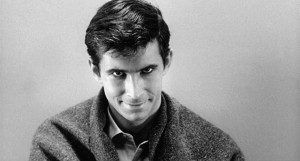
Anthony Perkins as Norman Bates, missing his mother 


To find out about more Cinematic Sinfonia screenings, follow them on Twitter @cinesinfonia

Thursday, 19 February 2015

Cats - Review

London Palladium, London

*****

Music by Andrew Lloyd Webber
Based on 'Old Possum's Book Of Practical Cats by T.S.Eliot
Directed by Trevor Nunn

Kerry Ellis

Back in 1981 Cats re-wrote the rule book of musical theatre. Not just for being the first show immediately recognisable by an image that was to become an iconic brand (those flaming cats eyes with their dancers for pupils - shrewd work, producer Cameron Mackintosh), but for being one of the first through-danced musicals, a concept never before tackled in England. Cats' plot (if there is one) is implausible. Rather, it took the genius vision of a young Lloyd Webber to set this quirky anthology of Eliot verse to music. The rest is theatre history as the show went on to smash box-office records on both sides of the Atlantic.

That Cats in 2015 works at all is down to the show's (now pensioner) creatives and an exceptional cast. Disbelief is quickly suspended and in a production that eschews masks and puppets, the feline transformation is achieved solely through the human skills of the companys' voices, movement and facial expression. At all times the audience can see that these are just people, albeit gloriously costumed and made up, but people nonetheless who with catlike tread and stunning choreography achieve a fabulous illusion. 

Eliot's words are marvellously crafted. They truly don't write 'em like that anymore and his 1930's gems are just steeped in Bloomsbury and a time when trains had First and Third Class carriages, a magical glimpse into an England past. No other writer other than perhaps Matilda's Tim Minchin displays the maverick and eccentric yet profoundly perceptive wit that Eliot masters. Andrew Lloyd Webber's score, played under the experienced baton of Anthony Gabriele and ranging from the haunting minor key harmonics of the Jellicles’ motif, through to the torch-song triumph that is Memory, has evolved into a modern classic.

Legendary choreographer Gillian Lynne neatly re-works her original routines to accommodate the Palladium’s traditional proscenium setting, with modern day dance maestro Bill Deamer adding his talent to staging the coolly jazz-themed Gumbie Cat tap number. John Napier's design has similarly been tailored yet still remains a fairytale setting (beautifully lit) of over-sized trash. (The eagle eyed in the audience will spot that the bashed up car’s number plate has been updated to NAP 70, Napier’s age when the show re-opened last year.)

But Cats, then and forever, has always been about the actors. As well as some fresh young talent, many feline-hardened veterans from the show’s various former and touring productions have been press ganged into service at the Palladium. Excellence is everywhere, but particularly memorable amongst the cattery are Benjamin Yates’ Mungojerrie, who delivers impossible athleticism with an almost Russell Brand styled insouciance whilst Joseph Poulton’s Mistoffeles and Ross Finnie’s Skimbleshanks are both visual delights. (That junk-yard train gets me every time.) A nod too to Callum Train’s Munkustrap who virtually MC’s the show with a breathtaking agility and of course few West End musicals are complete these days without a Strallen. Zizi’s Demeter duly and demurely delivers.

It is however Kerry Ellis’ name that tops the bill at the London Palladium and with good reason. Her poise as faded galmour-puss Grizabella is as poignant as it is perfect. Where the rest of the cast are shod in dance shoes Ellis, fur all mangy, is forced to totter around the stage in impossibly tawdry heels, defining Grizabella's tragedy in poise and presence. And then she sings.

On its own, Memory is one of Lloyd Webber’s biggest selling singles and much like Grizabella herself, it’s a tart of a song that everyone over the last thirty years as had a piece of. The audience knows it, loves it and their expectations as Ellis, along with Natasha Mould’s Jemima tackles the opening bars, are sky high. Ellis doesn’t just meet those expectations however – she smashes them. And as her Grizabella desperately pleads for affection with the shockingly simple words “Touch me”, this queen of London’s musical theatre quite simply takes the Palladium’s roof off. The moment is electrifying and unforgettable. It has been far too long since the West End was last treated to an 11 o’clock number of such jaw-dropping magnificence.

There is no more to add. As world class musical theatre Cats, with Kerry Ellis, is un-missable.


Now booking until 25th April 2015

Tuesday, 11 June 2013

The Three Phantoms

Swan Theatre, High Wycombe


*****


The Three Phantoms

The Three Phantoms features three of Britain’s finest musical theatre tenors together with outstanding support, performing an immaculately drilled whirl through many familiar show tunes, plus a few surprises too, from Broadway and the West End.

Emerging onto the stage in immaculately tailored light grey suits with purple tie and handkerchiefs and all of a uniform height, one could be excused for mistaking the Phantoms for a Virgin Atlantic cabin crew, albeit a crew whose performances are nothing less than Upper Class. In this outing, the trio comprises Earl Carpenter who conceived the show, Matthew Cammelle and Stephen John Davis. Each introduces himself with a solo, of which Davis’ Mr Cellophane from Chicago was a particular treat. With voice and acting in sweet synchronicity, Davis brilliantly extracts the complex humour and pathos that Kander and Ebb wove into the number. Alistair Barron as a supporting tenor joins the Phantoms for an exquisite Maria from West Side Story, the arrangement of the number broken down into a four part harmony being the first of some truly memorable moments.

A Phantom must have his Christine and thus soprano Rebecca Caine is introduced half way through act one. Whilst her dazzlingly tailored red evening gown, amongst the purple tinted men, continued only the briefest of hints towards the sassy Virgin Atlantic colour scheme, her outfit exuded nothing if not refined understated majesty. Not only is Caine one of the few singers in theatre to boast a classical opera training, but her enchanting features belie her considerable experience. She created Cosette in Les Miserables, played Christine opposite Michael Crawford's Phantom and went on to create that role in Canada opposite Colm Wilkinson. Caine gives a fine interpretation to I Could Have Danced All Night and accompanied by Annette Yeo and Mandy Whatsham Dunstall, the rarely heard Make Him Mine from The Witches of Eastwick proves another magical moment.

With an eye to the practicalities of a gruelling tour schedule, the music of the night has been pared down to Anthony Gabriele, musical director, on piano with a beautifully arranged cello accompaniment from Yvonne Marie Parsons. Gabriele has performed with the show since its inception and his understanding of each of the songs’ subtleties and sweet spots complements the singers like a fine wine matching gastronomy. Act one closes with a medley from Les Miserables commencing with Gabriele leaving his piano to conduct the seven voices (eight, including Parsons who downs her bow to sing) in a sublime a-capella version of  I Dreamed A Dream. The vocal beauty of this particular arrangement is breathtaking and the show should be seen if for no other reason than to experience quite what the human voice is capable of in this one song.


The Ensemble

Act two’s highlights include Earl Carpenter’s take on Matilda’s The Hammer. His Trunchbull is a cleverly crafted grotesque and it is surely only a matter of time before the RSC hire him to perform the loathsome headmistress. In a tribute to other shows based on or around Gaston Leroux’s Phantom Of The Opera, Matthew Cammelle gives a soaring Til I Hear You Sing from Love Never Dies, making one wish  for that show's return and as her solo finale, a bejewelled Rebecca Caine performs Think Of Me, hitting those glorious final stanzas with a controlled magnificence that sparked a  mini standing ovation.

The Three Phantoms is probably the finest collection of songs from the shows to be found on tour. Whilst the programme has a few oddities (three numbers from Spamalot is possibly too many), it remains packed with favourites and the production values that surround the evening are faultless. The set is simply but stylishly staged, beautifully lit and the sound is perfectly balanced. Above all the show presents four international stars of musical theatre whose talents are incomparable. Should The Three Phantoms descend upon your town, don’t miss them.


Touring until July 6