Showing posts with label Bernard Herrmann. Show all posts

Tuesday, 17 December 2019

The Red Shoes - Review

Sadler’s Wells, London


*****


Based on the film by Michael Powell and Emeric Pressburger
and the Hans Christian Andersen fairy tale
Music by Bernard Herrmann
Directed and choreographed by Matthew Bourne


Adam Cooper, Stephen Murray, Cordelia Braithwaite

Matthew Bourne’s The Red Shoes returns to Sadler’s Wells three years after it first premiered - and while the score and dance remain exquisite, there is a depth to this ballet that has only matured over time.

This time around, Bernard Herrmann’s score is played live with the ingenious transposition of work from his various movie compositions flowing so seamlessly around Bourne’s creation, that one senses the music could almost have been commissioned for this production.

The movement of course is exquisite in its story of a doomed love triangle that evolves within the Ballet Lermontov. A love blossoms between ballerina Victoria Page and Julian Craster a young composer at the ballet, while throughout Boris Lermontov, the company’s impresario harbours his own lustful desire for Page. Alongside this cocktail of human passion, there is within the tale, The Red Shoes Ballet itself, a Lermontov production that tells of the enchanted/cursed shoes, and the macabre power they can exert over their wearer.

On press night Ashley Shaw played Page, Dominic North, Craster and Adam Cooper, Lermontov with all three impeccable in their bringing to life the tragic romance. As the narrative shifts across Britain and France their dance, and of course the work of their fellow corps of dancers, allows this difficult and disturbing love story to unfold before us. In the 2019 iteration however, the psychology of the story’s underlying emotional complexities is even more vivid than three years ago. Unquestionably dark and yet stunningly portrayed, Bourne captures the gothic horror of Hans Christian Andersen’s fairy tale and imbues it with a believable 20th-century relevance.

Lez Brotherston’s ingenious swivelling proscenium arch remains a masterclass in stage design, as Brett Morris conducts the New Adventures Orchestra with a heart-soaring fluidity. Playing into the new year, The Red Shoes continues to offer an evening of world class entertainment and dance.


Playing at Sadler’s Wells until 19th January 2020, then touring
Photo credit: Johan Persson

Sunday, 18 December 2016

The Red Shoes - Review

Sadler's Wells, London


*****


Based on the film by Michael Powell and Emeric Pressburger
and the Hans Christian Andersen fairy tale
Music by Bernard Herrmann
Directed and choreographed by Matthew Bourne


Ashley Shaw

The influences of cinema on Matthew Bourne’s The Red Shoes are everywhere. Walking into Sadler's Wells one sees that the stage is hidden behind an old style cinema curtain. The impression is both enchanting and effective, for Bourne’s latest offering is, in its elements, a ballet about a movie, about a ballet.

In the way that, back in 1948, Michael Powell and Emeric Pressburger created the Oscar winning movie that itself had been inspired by Hans Christian Andersen's classic fairy tale - so too, nearly 70 years later has Bourne taken that movie and re-imagined it onto the dance stage. 

But this ballet is so much more than a glorious re-imagining of a classic film - for where Powell and Pressburger invited Brian Easdale to score the movie, Bourne has actually shifted his musical focus to Easdale's contemporary (and fellow Academy Award winner) Bernard Herrmann - and assisted by Terry Davies' magnificent orchestrations, a new musical composition for the ballet has been carefully stitched together, drawn entirely from Hermann's scores. The choice of music is inspired - and as cigarette smoke hangs in the air of nearly every scene, whilst the shoes may be red, the very essence of this production is noir.

The story revolves around Victoria Page, prima ballerina in the Ballet Lermontov and her role within "The Red Shoes" ballet within a ballet. The first half spills across locations in London and Monte Carlo and as Page moves closer to the first half's closing routine of the Red Shoes ballet itself, a doomed love triangle emerges. Boris Lermontov burns with an unrequited jealous desire for his star. Page however only has eyes for Julian Craster (Lermontov's orchestra conductor) and it is clear that both she and Craster are madly in love with each other.

Act Two tracks the trio across Europe and as much as Bourne's visionary choreography relates the narrative, so too does Lez Brotherston's stage design, with curves of balustrade immediately evoking the French Riviera. Brotherston draws upon the simplest concepts of design, married to 21st century technology. Suspended from a gantry, that itself moves across the stage in a way that the Starlight Express designers could only have dreamed of, the aforementioned cinema curtains evolve into the proscenium arches of opera houses, before melding into tugged back glimpses of the triangle's respective boudoirs as passions smoulder. Elsewhere, Brotherston’s evocation of a Monte Carlo steam engine is every bit as effective as his creation of a Mississippi steamboat for Sheffield's Showboat last Christmas.

But the beauty of a Bourne ballet is the visionary dance. As Victoria Page, Ashley Shaw drives the show, a mixture of poised passion and pathos. Bourne coaxes so much expression from her, both facial and in her movement, that the story flows effortlessly. Sam Archer and Dominic North as Lermontov and Craster respectively offer equally poised and perfectly weighted support to Page's arc. 

The Red Shoes Ballet sequence itself is of course enchanting. Duncan McLean’s projections providing a eerily ethereal backdrop to Bourne’s interpretation of the fairy tale. Alongside Shaw, Michela Meazza, Liam Mower and Glenn Graham as key dancers in the Ballet Lermontov provide a perfect complement to the story's detail. 

Sold out at Sadler's Wells for the rest of the run, a continued bravo to Sir Matthew and his New Adventures company for spending the next six gruelling months on the road, touring The Red Shoes around the UK. Whether one is a lifelong ballet devotee, or completely new to the genre, the show is unmissable. Kill to get a ticket!


Runs until 29th January 2017 - Then on tour. Tour details here
Photo credit: Johan Persson

Saturday, 7 March 2015

Psycho Live - Review

Dominion Theatre, London

*****

Screenplay by Joseph Stefano
Based on the novel Psycho by Robert Bloch
Directed by Alfred Hitchcock
Orchestral score by Bernard Herrmann
Performed live by Cinematic Sinfonia
Conducted by Anthony Gabriele

Janet Leigh takes a shower in Psycho

It’s been a long long time since the opening bars of a movie’s score have made the hairs on the back of my neck prick up. But sat in the Dominion Theatre, as Psycho’s split-text title lines slid across the screen, to listen to Bernard Herrmann’s strings-only orchestration played by the Cinematic Sinfonia orchestra was to truly experience the magic of the movies.

The likes of Netflix and Apple have gone a long way to neuter the majesty of cinema. Imagery that  was once beautifully photographed for the vast expanse of cinemascope is now routinely streamed to our eponymous tiny telephones and tablets and one can fear for a generation currently growing up, who may well consider a trip to a local cinema’s full sized silver screen to be an unnecessary and expensive chore. So whilst this (partly premium-priced) event may well have been one for the fans, it was worth every penny.

Another feature of the evening was in actually seeing and hearing  the film's music played live, giving rise to a strange sense of witnessing the re-creation of what used to be a fundamental component of any movie’s construction. When any original score was recorded, it would have demanded a conductor facing the screen as he conducts his studio orchestra in time with the action – just the scenario that the Dominion audience were privileged to witness for themselves.

It was of course also a treat to re-visit a movie classic and one can forget quite how groundbreaking Psycho's 1960 release was to prove, shaking up many of the movie-industry’s accepted protocols. Intermingling sex with violence and deviancy – even the opening scene of Janet Leigh, bra-clad and in bed with her unmarried lover pushed the envelope of its time. And the dialogue is just so deliciously dated too. When Leigh’s Marion Crane tells Anthony Perkin’s Norman Bates, who has just explained to her the gruesome yet mundane details of his interest in taxidermy, that “a man should have a hobby”, a comment so simple and genteel and so firmly fixed in a time gone by.

Shot in black and white by Hitchcock's TV series camera crew rather than a feature film unit, the production budget was a squeeze. In fact, so tight were the movie’s finances that Herrmann, who resolutely refused to cut his own fee, was forced to trim his orchestra to strings only. Has necessity ever been proved to have been the mother (no pun intended) of such ultimately rich invention? Some years back The Observer published its list of the 50 film scores. Psycho was ranked #2 and the paper wrote:

Hitchcock, who had originally planned to play the shower sequence without accompaniment, later admitted that '33 per cent of the effect of Psycho was due to the music', and doubled the composer's salary as a reward. Herrmann studiously matched the black and white visuals of Hitch's masterpiece by draining the 'colour' from his orchestrations, stripping away all but the stringed instruments to create a monochrome wall of aural unease.

And remarkably for a film that was to achieve iconic status, amongst that season’s major gongs Psycho was to only pick up a Golden Globe for Leigh, winning nothing at the Oscars. But as the years have proven and as modern-day horror director Eli Roth recently commented, “..time is the only critic that matters”.

Hitchcock’s assessment of the music’s contribution was sage. So much of the story’s drama, and in particular its opening chapters, homing in on Marion’s anxiety after she has stolen the cash from her boss, play out with an absolutely excruciating intensity. The performance and the photography are first class, but it is Herrmann’s relentlessly jarring strings with their harsh minor-key harmonics, that seal the woman’s anguish into our watching psyches. And for a feature film that was to give the world the slasher-movie, Herrmann’s jagged chords as Crane is stabbed to death in the most famous shower scene ever, only heighten that moment’s timeless terror.

Conductor Gabriele knows both movie and score intimately, with this having been the fourth occasion that time he has brandished his baton in time with Bates’ bread knife. Gabriele is one of London’s finest stage-conductors, adept at seamlessly linking an orchestra to the ebb and flow of a live production. But there is no scope for fluid flexibility in conductiong in time to a movie. The imagery and dialog are fixed in time and it is Gabriele’s responsibility to ensure that his musicians maintain pinpoint co-ordination with the screen. It is a massive task and it is a mark of Gabriele’s consummate skill that he makes it look so effortless – and a credit too to the Cinematic Sinfonica orchestra for delivering such an immaculately rehearsed sound. 

Gabriele has a passion for film and music, telling me post-Psycho of plans (and dreams) to conduct future movie scores by the likes of John Williams and Hans Zimmer, as well as other Herrmann offerings. Personally, I long for Ennio Morricone’s work for The Mission and Once Upon A Time In America to be given the Gabriele treatment. Maybe one day…

Until then, the sheer musical excellence of Psycho Live, wedded to Hitchcock’s masterclass in film-making will stay with me for a long time. And in a further thoughtful touch, possibly barely noticed by many in the audience, how considerate of the Dominion to screen the movie in the run up to Mother’s Day!
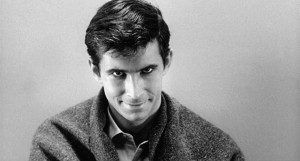

Anthony Perkins as Norman Bates, missing his mother 


To find out about more Cinematic Sinfonia screenings, follow them on Twitter @cinesinfonia